Buy 180x360.eu ?
We are moving the project
180x360.eu .
Are you interested in purchasing the domain
180x360.eu ?
domain@kv-gmbh.de · 0541-91531010
Buy 180x360.eu ?
How can one convert acceleration to Earth acceleration?
To convert acceleration to Earth acceleration, one can use the formula: Earth acceleration = acceleration / 9.81 m/s^2. This formula is derived from the fact that Earth's gravitational acceleration is approximately 9.81 m/s^2. By dividing the given acceleration value by 9.81 m/s^2, one can determine how many times greater or smaller the acceleration is compared to Earth's gravitational acceleration. This conversion is useful for comparing accelerations in different contexts to the standard acceleration due to gravity on Earth. **
How can one convert acceleration to Earth's acceleration?
To convert acceleration to Earth's acceleration, one can simply divide the given acceleration by the acceleration due to gravity on Earth, which is approximately 9.81 m/s^2. This will give the acceleration in terms of how many times Earth's gravity it is. For example, if a car is accelerating at 5 m/s^2, dividing this by 9.81 m/s^2 will give approximately 0.51 g, where g represents Earth's acceleration due to gravity. **


Similar search terms for Acceleration
Top-Angebote
Products related to Acceleration:
-
Uplift Essentials Virtual Motion Ocean Aquarium Lamp Virtual Motion Ocean Aquarium Lamp"Experience the tranquil beauty of the deep blue without the maintenance of a real tank with the Virtual Motion Ocean Aquarium Lamp. This creative decorative piece uses highdefinition ""moving picture"" technology to simulate a vibrant tropical reef,..."79,97 $*Shipping: 0,00 $Secure redirect to the provider
-
Uplift Essentials Serene Motion Virtual Aquarium Lamp Serene Motion Virtual Aquarium Lamp"Bring the soothing magic of the underwater world to your tabletop with the Serene Motion Virtual Aquarium Lamp. This highdefinition desktop aquarium decorative light uses advanced ""movingpicture"" technology to create a mesmerizing, continuous swim..."82,97 $*Shipping: 0,00 $Secure redirect to the provider
-
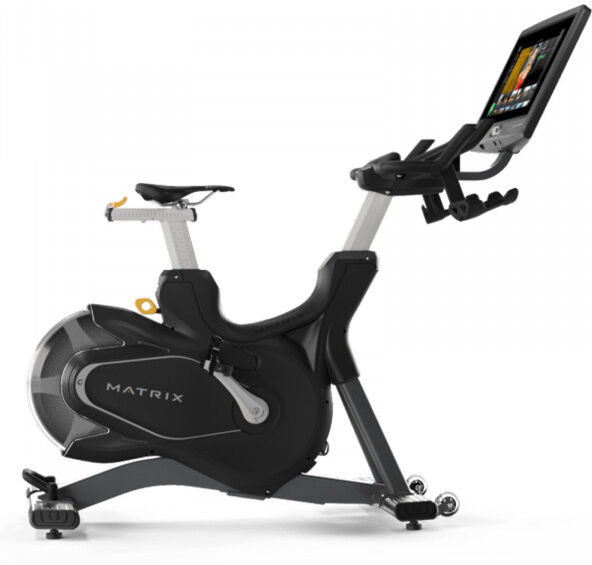
Matrix Virtual Training Cycle CXVTHE MATRIX VIRTUAL TRAINING CYCLE The Matrix Virtual Training Cycle is the purpose built bike for your cardio zone. Whether gym members are challenging themselves with exclusive workouts, enjoying streaming entertainment or taking on an immersive group class, the Virtual Training Cycle will...4794,00 £*Shipping: 0,00 £Secure redirect to the provider
-
soundcore P31i Wireless Earbuds with Immersive Adaptive ANCBulk Headphones, Earbuds, and Speakers for Business >>>>> Real-Time Adaptive Noise Cancelling Advanced ANC reduces noise by up to 52 dB. Adaptive technology detects your surroundings and automatically chooses the best noise-cancelling level for you....32,99 $*Shipping: 0,00 $Secure redirect to the provider



-
What is the difference between gravitational acceleration and Earth's acceleration?
Gravitational acceleration is the acceleration experienced by an object due to the force of gravity, which is approximately 9.81 m/s^2 on the surface of the Earth. Earth's acceleration, on the other hand, refers to the acceleration of the Earth itself as it orbits the Sun, which is approximately 9.81 m/s^2 towards the Sun. In essence, gravitational acceleration is the acceleration experienced by objects on Earth due to gravity, while Earth's acceleration is the acceleration of the Earth as it moves through space. **
-
What is the difference between tangential acceleration and rotational acceleration?
Tangential acceleration is the acceleration of an object moving in a circular path, and it is directed along the tangent to the path. It is caused by a change in the object's speed or direction. On the other hand, rotational acceleration is the rate of change of angular velocity of an object rotating around an axis. It is caused by a torque or force acting on the object, and it is directed perpendicular to the plane of rotation. In summary, tangential acceleration is related to linear motion in a circular path, while rotational acceleration is related to the change in the rate of rotation of an object. **
-
What is the formula for acceleration in uniform acceleration in physics?
The formula for acceleration in uniform acceleration in physics is given by a = (v - u) / t, where a is the acceleration, v is the final velocity, u is the initial velocity, and t is the time taken. This formula represents the change in velocity over time, and it is used to calculate the rate at which an object's velocity is changing. Acceleration is measured in meters per second squared (m/s^2). **
-
Is acceleration always constant?
No, acceleration is not always constant. Acceleration is the rate of change of velocity, so if an object's velocity is changing at a constant rate, then its acceleration is constant. However, if an object's velocity is changing at a non-constant rate, then its acceleration will also be non-constant. For example, when an object is thrown upwards, its acceleration due to gravity is constant, but when a car is speeding up or slowing down, its acceleration is not constant. **


Why is there acceleration?
Acceleration occurs when there is a change in an object's velocity, either in magnitude or direction. This change can be caused by a force acting on the object, such as gravity, friction, or a push or pull from another object. According to Newton's second law of motion, the acceleration of an object is directly proportional to the net force acting on it and inversely proportional to its mass. Therefore, if there is a net force acting on an object, it will experience acceleration in the direction of the force. **
What is negative acceleration?
Negative acceleration, also known as deceleration or retardation, occurs when an object's velocity decreases over time. This means that the object is slowing down. Negative acceleration can be caused by forces such as friction, air resistance, or opposing forces acting on the object. It is represented by a negative value in equations of motion and is the opposite of positive acceleration, which causes an object to speed up. **
Top-Angebote
Products related to Acceleration:
-
Uplift Essentials Virtual Motion Ocean Aquarium Lamp Virtual Motion Ocean Aquarium Lamp"Experience the tranquil beauty of the deep blue without the maintenance of a real tank with the Virtual Motion Ocean Aquarium Lamp. This creative decorative piece uses highdefinition ""moving picture"" technology to simulate a vibrant tropical reef,..."79,97 $*Shipping: 0,00 $Secure redirect to the provider
-
Uplift Essentials Serene Motion Virtual Aquarium Lamp Serene Motion Virtual Aquarium Lamp"Bring the soothing magic of the underwater world to your tabletop with the Serene Motion Virtual Aquarium Lamp. This highdefinition desktop aquarium decorative light uses advanced ""movingpicture"" technology to create a mesmerizing, continuous swim..."82,97 $*Shipping: 0,00 $Secure redirect to the provider
-
How can one convert acceleration to Earth acceleration?
To convert acceleration to Earth acceleration, one can use the formula: Earth acceleration = acceleration / 9.81 m/s^2. This formula is derived from the fact that Earth's gravitational acceleration is approximately 9.81 m/s^2. By dividing the given acceleration value by 9.81 m/s^2, one can determine how many times greater or smaller the acceleration is compared to Earth's gravitational acceleration. This conversion is useful for comparing accelerations in different contexts to the standard acceleration due to gravity on Earth. **
-
How can one convert acceleration to Earth's acceleration?
To convert acceleration to Earth's acceleration, one can simply divide the given acceleration by the acceleration due to gravity on Earth, which is approximately 9.81 m/s^2. This will give the acceleration in terms of how many times Earth's gravity it is. For example, if a car is accelerating at 5 m/s^2, dividing this by 9.81 m/s^2 will give approximately 0.51 g, where g represents Earth's acceleration due to gravity. **
-
What is the difference between gravitational acceleration and Earth's acceleration?
Gravitational acceleration is the acceleration experienced by an object due to the force of gravity, which is approximately 9.81 m/s^2 on the surface of the Earth. Earth's acceleration, on the other hand, refers to the acceleration of the Earth itself as it orbits the Sun, which is approximately 9.81 m/s^2 towards the Sun. In essence, gravitational acceleration is the acceleration experienced by objects on Earth due to gravity, while Earth's acceleration is the acceleration of the Earth as it moves through space. **
-
What is the difference between tangential acceleration and rotational acceleration?
Tangential acceleration is the acceleration of an object moving in a circular path, and it is directed along the tangent to the path. It is caused by a change in the object's speed or direction. On the other hand, rotational acceleration is the rate of change of angular velocity of an object rotating around an axis. It is caused by a torque or force acting on the object, and it is directed perpendicular to the plane of rotation. In summary, tangential acceleration is related to linear motion in a circular path, while rotational acceleration is related to the change in the rate of rotation of an object. **
Similar search terms for Acceleration
-
Matrix Virtual Training Cycle CXVTHE MATRIX VIRTUAL TRAINING CYCLE The Matrix Virtual Training Cycle is the purpose built bike for your cardio zone. Whether gym members are challenging themselves with exclusive workouts, enjoying streaming entertainment or taking on an immersive group class, the Virtual Training Cycle will...4794,00 £*Shipping: 0,00 £Secure redirect to the provider
-
soundcore P31i Wireless Earbuds with Immersive Adaptive ANCBulk Headphones, Earbuds, and Speakers for Business >>>>> Real-Time Adaptive Noise Cancelling Advanced ANC reduces noise by up to 52 dB. Adaptive technology detects your surroundings and automatically chooses the best noise-cancelling level for you....32,99 $*Shipping: 0,00 $Secure redirect to the provider
-
soundcore P31i Wireless Earbuds with Immersive Adaptive ANC BlackReal-Time Adaptive Noise Cancelling: Reduces noise by up to 52 dB with adaptive technology that detects your surroundings and automatically chooses the best noise-cancelling level for you. Hi-Res Certified Sound with LDAC: Enjoy stunning, lossless Hi-Fi audio powered by LDAC and Hi-Res Audio certifications. These noise-cancelling earbuds accurately deliver the fine details for rich, well-balanced treble and bass. Instant AI Translation: Instantly understand 100 languages with accurate two-way translation to make communicating with the world even easier and real-time translation so you understand speeches or meetings no matter where you are. Crisp, Clear Calls: Six microphones and advanced AI work together to filter out external noise and wind for crystal-clear calls. Be heard loud and clear no matter where you are, for conversations that sound like they're face-to-face. Listen for Longer: Get up to 10 hours of playtime on a single charge and a total of 50 with the case, with noise cancellation enabled, get up to 8 hours of playtime on a single charge and a total of 40 with the case. A 10-minute charge delivers up to 3 hours of playtime.29,98 £*Shipping: 0,00 £Secure redirect to the provider
-
soundcore P31i Wireless Earbuds with Immersive Adaptive ANCBulk Headphones, Earbuds, and Speakers for Business >>>>> Real-Time Adaptive Noise Cancelling Advanced ANC reduces noise by up to 52 dB. Adaptive technology detects your surroundings and automatically chooses the best noise-cancelling level for you....32,99 $*Shipping: 0,00 $Secure redirect to the provider
-
What is the formula for acceleration in uniform acceleration in physics?
The formula for acceleration in uniform acceleration in physics is given by a = (v - u) / t, where a is the acceleration, v is the final velocity, u is the initial velocity, and t is the time taken. This formula represents the change in velocity over time, and it is used to calculate the rate at which an object's velocity is changing. Acceleration is measured in meters per second squared (m/s^2). **
-
Is acceleration always constant?
No, acceleration is not always constant. Acceleration is the rate of change of velocity, so if an object's velocity is changing at a constant rate, then its acceleration is constant. However, if an object's velocity is changing at a non-constant rate, then its acceleration will also be non-constant. For example, when an object is thrown upwards, its acceleration due to gravity is constant, but when a car is speeding up or slowing down, its acceleration is not constant. **
-
Why is there acceleration?
Acceleration occurs when there is a change in an object's velocity, either in magnitude or direction. This change can be caused by a force acting on the object, such as gravity, friction, or a push or pull from another object. According to Newton's second law of motion, the acceleration of an object is directly proportional to the net force acting on it and inversely proportional to its mass. Therefore, if there is a net force acting on an object, it will experience acceleration in the direction of the force. **
-
What is negative acceleration?
Negative acceleration, also known as deceleration or retardation, occurs when an object's velocity decreases over time. This means that the object is slowing down. Negative acceleration can be caused by forces such as friction, air resistance, or opposing forces acting on the object. It is represented by a negative value in equations of motion and is the opposite of positive acceleration, which causes an object to speed up. **
* All prices are inclusive of VAT and, if applicable, plus shipping costs. The offer information is based on the details provided by the respective shop and is updated through automated processes. Real-time updates do not occur, so deviations can occur in individual cases. ** Note: Parts of this content were created by AI.