Buy 180x360.eu ?
We are moving the project
180x360.eu .
Are you interested in purchasing the domain
180x360.eu ?
domain@kv-gmbh.de · 0541-91531010
Buy 180x360.eu ?
How are derivatives related?
Derivatives are related in the sense that they are all based on the concept of the rate of change. For example, the derivative of a function represents the rate at which the function is changing at a given point. Additionally, different types of derivatives, such as options, futures, and swaps, are related in that they are all financial instruments whose values are derived from the value of an underlying asset or index. Overall, derivatives are related in their fundamental basis of measuring and capturing the rate of change in various contexts. **
What is meant by derivatives?
Derivatives are financial instruments whose value is derived from the value of an underlying asset, index, or rate. They can be used for hedging, speculation, or arbitrage purposes. Examples of derivatives include options, futures, forwards, and swaps. **


Similar search terms for Derivatives
Top-Angebote
Products related to Derivatives:
-
Matrix Virtual Training Cycle CXVTHE MATRIX VIRTUAL TRAINING CYCLE The Matrix Virtual Training Cycle is the purpose built bike for your cardio zone. Whether gym members are challenging themselves with exclusive workouts, enjoying streaming entertainment or taking on an immersive group class, the Virtual Training Cycle will...4794,00 £*Shipping: 0,00 £Secure redirect to the provider
-
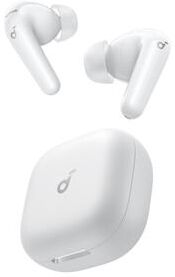
soundcore P31i Wireless Earbuds with Immersive Adaptive ANCBulk Headphones, Earbuds, and Speakers for Business >>>>> Real-Time Adaptive Noise Cancelling Advanced ANC reduces noise by up to 52 dB. Adaptive technology detects your surroundings and automatically chooses the best noise-cancelling level for you....32,99 $*Shipping: 0,00 $Secure redirect to the provider
-
soundcore P31i Wireless Earbuds with Immersive Adaptive ANC BlackReal-Time Adaptive Noise Cancelling: Reduces noise by up to 52 dB with adaptive technology that detects your surroundings and automatically chooses the best noise-cancelling level for you. Hi-Res Certified Sound with LDAC: Enjoy stunning, lossless Hi-Fi audio powered by LDAC and Hi-Res Audio certifications. These noise-cancelling earbuds accurately deliver the fine details for rich, well-balanced treble and bass. Instant AI Translation: Instantly understand 100 languages with accurate two-way translation to make communicating with the world even easier and real-time translation so you understand speeches or meetings no matter where you are. Crisp, Clear Calls: Six microphones and advanced AI work together to filter out external noise and wind for crystal-clear calls. Be heard loud and clear no matter where you are, for conversations that sound like they're face-to-face. Listen for Longer: Get up to 10 hours of playtime on a single charge and a total of 50 with the case, with noise cancellation enabled, get up to 8 hours of playtime on a single charge and a total of 40 with the case. A 10-minute charge delivers up to 3 hours of playtime.29,98 £*Shipping: 0,00 £Secure redirect to the provider
-
soundcore P31i Wireless Earbuds with Immersive Adaptive ANCBulk Headphones, Earbuds, and Speakers for Business >>>>> Real-Time Adaptive Noise Cancelling Advanced ANC reduces noise by up to 52 dB. Adaptive technology detects your surroundings and automatically chooses the best noise-cancelling level for you....32,99 $*Shipping: 0,00 $Secure redirect to the provider



-
What are derivatives used for?
Derivatives are financial instruments that derive their value from an underlying asset, such as stocks, bonds, commodities, or currencies. They are used for various purposes, including hedging against price fluctuations, speculating on future price movements, and managing risk in investment portfolios. Derivatives can also be used to leverage investment positions, allowing investors to potentially amplify their returns. Overall, derivatives play a crucial role in financial markets by providing liquidity, price discovery, and risk management tools for investors and businesses. **
-
How can derivatives be formed?
Derivatives can be formed through a process called differentiation in calculus. This involves finding the rate of change of a function at a specific point. By taking the derivative of a function, we can determine how the function's value is changing with respect to its input. Derivatives can also be formed through rules and formulas that allow us to find the derivative of more complex functions. **
-
How can one assign derivatives?
One can assign derivatives by calculating the rate of change of a function with respect to its independent variable. This involves finding the limit of the difference quotient as the interval over which the change is measured approaches zero. The derivative represents the slope of the tangent line to the function at a specific point and can be used to analyze the behavior of the function at that point. Derivatives are fundamental in calculus and are used to solve various problems in mathematics, science, and engineering. **
-
How do you determine derivatives?
To determine derivatives, you can use various methods such as the power rule, product rule, quotient rule, and chain rule. The power rule is used to find the derivative of functions raised to a power. The product rule is used to find the derivative of the product of two functions. The quotient rule is used to find the derivative of the quotient of two functions. The chain rule is used to find the derivative of composite functions. Additionally, you can also use the concept of limits to find the derivative of a function at a specific point. **


Are my graphical derivatives correct?
To determine if your graphical derivatives are correct, you should compare them to the analytical derivatives of the function you are working with. If the graphical derivatives match the analytical derivatives at various points on the graph, then they are likely correct. Additionally, you can also check for consistency in the slopes of the tangent lines at different points on the graph to verify the accuracy of your graphical derivatives. **
What are derivatives of fractions?
The derivatives of fractions involve applying the quotient rule, which states that the derivative of a fraction is the derivative of the numerator times the denominator minus the numerator times the derivative of the denominator, all divided by the square of the denominator. In other words, to find the derivative of a fraction, we differentiate the top and bottom separately and then use the quotient rule to combine them. This allows us to find the rate of change of a fraction with respect to its variable. **
Top-Angebote
Products related to Derivatives:
-
Uplift Essentials Serene Motion Virtual Aquarium Lamp Serene Motion Virtual Aquarium Lamp"Bring the soothing magic of the underwater world to your tabletop with the Serene Motion Virtual Aquarium Lamp. This highdefinition desktop aquarium decorative light uses advanced ""movingpicture"" technology to create a mesmerizing, continuous swim..."82,97 $*Shipping: 0,00 $Secure redirect to the provider
-
Uplift Essentials Virtual Motion Ocean Aquarium Lamp Virtual Motion Ocean Aquarium Lamp"Experience the tranquil beauty of the deep blue without the maintenance of a real tank with the Virtual Motion Ocean Aquarium Lamp. This creative decorative piece uses highdefinition ""moving picture"" technology to simulate a vibrant tropical reef,..."79,97 $*Shipping: 0,00 $Secure redirect to the provider
-
Matrix Virtual Training Cycle CXVTHE MATRIX VIRTUAL TRAINING CYCLE The Matrix Virtual Training Cycle is the purpose built bike for your cardio zone. Whether gym members are challenging themselves with exclusive workouts, enjoying streaming entertainment or taking on an immersive group class, the Virtual Training Cycle will...4794,00 £*Shipping: 0,00 £Secure redirect to the provider
-
soundcore P31i Wireless Earbuds with Immersive Adaptive ANCBulk Headphones, Earbuds, and Speakers for Business >>>>> Real-Time Adaptive Noise Cancelling Advanced ANC reduces noise by up to 52 dB. Adaptive technology detects your surroundings and automatically chooses the best noise-cancelling level for you....32,99 $*Shipping: 0,00 $Secure redirect to the provider
-
How are derivatives related?
Derivatives are related in the sense that they are all based on the concept of the rate of change. For example, the derivative of a function represents the rate at which the function is changing at a given point. Additionally, different types of derivatives, such as options, futures, and swaps, are related in that they are all financial instruments whose values are derived from the value of an underlying asset or index. Overall, derivatives are related in their fundamental basis of measuring and capturing the rate of change in various contexts. **
-
What is meant by derivatives?
Derivatives are financial instruments whose value is derived from the value of an underlying asset, index, or rate. They can be used for hedging, speculation, or arbitrage purposes. Examples of derivatives include options, futures, forwards, and swaps. **
-
What are derivatives used for?
Derivatives are financial instruments that derive their value from an underlying asset, such as stocks, bonds, commodities, or currencies. They are used for various purposes, including hedging against price fluctuations, speculating on future price movements, and managing risk in investment portfolios. Derivatives can also be used to leverage investment positions, allowing investors to potentially amplify their returns. Overall, derivatives play a crucial role in financial markets by providing liquidity, price discovery, and risk management tools for investors and businesses. **
-
How can derivatives be formed?
Derivatives can be formed through a process called differentiation in calculus. This involves finding the rate of change of a function at a specific point. By taking the derivative of a function, we can determine how the function's value is changing with respect to its input. Derivatives can also be formed through rules and formulas that allow us to find the derivative of more complex functions. **
Similar search terms for Derivatives
-
soundcore P31i Wireless Earbuds with Immersive Adaptive ANC BlackReal-Time Adaptive Noise Cancelling: Reduces noise by up to 52 dB with adaptive technology that detects your surroundings and automatically chooses the best noise-cancelling level for you. Hi-Res Certified Sound with LDAC: Enjoy stunning, lossless Hi-Fi audio powered by LDAC and Hi-Res Audio certifications. These noise-cancelling earbuds accurately deliver the fine details for rich, well-balanced treble and bass. Instant AI Translation: Instantly understand 100 languages with accurate two-way translation to make communicating with the world even easier and real-time translation so you understand speeches or meetings no matter where you are. Crisp, Clear Calls: Six microphones and advanced AI work together to filter out external noise and wind for crystal-clear calls. Be heard loud and clear no matter where you are, for conversations that sound like they're face-to-face. Listen for Longer: Get up to 10 hours of playtime on a single charge and a total of 50 with the case, with noise cancellation enabled, get up to 8 hours of playtime on a single charge and a total of 40 with the case. A 10-minute charge delivers up to 3 hours of playtime.29,98 £*Shipping: 0,00 £Secure redirect to the provider
-
soundcore P31i Wireless Earbuds with Immersive Adaptive ANCBulk Headphones, Earbuds, and Speakers for Business >>>>> Real-Time Adaptive Noise Cancelling Advanced ANC reduces noise by up to 52 dB. Adaptive technology detects your surroundings and automatically chooses the best noise-cancelling level for you....32,99 $*Shipping: 0,00 $Secure redirect to the provider
-
soundcore P31i Wireless Earbuds with Immersive Adaptive ANCBulk Headphones, Earbuds, and Speakers for Business >>>>> Real-Time Adaptive Noise Cancelling Advanced ANC reduces noise by up to 52 dB. Adaptive technology detects your surroundings and automatically chooses the best noise-cancelling level for you....32,99 $*Shipping: 0,00 $Secure redirect to the provider
-
soundcore P31i Wireless Earbuds with Immersive Adaptive ANCBulk Headphones, Earbuds, and Speakers for Business >>>>> Real-Time Adaptive Noise Cancelling Advanced ANC reduces noise by up to 52 dB. Adaptive technology detects your surroundings and automatically chooses the best noise-cancelling level for you....32,99 $*Shipping: 0,00 $Secure redirect to the provider
-
How can one assign derivatives?
One can assign derivatives by calculating the rate of change of a function with respect to its independent variable. This involves finding the limit of the difference quotient as the interval over which the change is measured approaches zero. The derivative represents the slope of the tangent line to the function at a specific point and can be used to analyze the behavior of the function at that point. Derivatives are fundamental in calculus and are used to solve various problems in mathematics, science, and engineering. **
-
How do you determine derivatives?
To determine derivatives, you can use various methods such as the power rule, product rule, quotient rule, and chain rule. The power rule is used to find the derivative of functions raised to a power. The product rule is used to find the derivative of the product of two functions. The quotient rule is used to find the derivative of the quotient of two functions. The chain rule is used to find the derivative of composite functions. Additionally, you can also use the concept of limits to find the derivative of a function at a specific point. **
-
Are my graphical derivatives correct?
To determine if your graphical derivatives are correct, you should compare them to the analytical derivatives of the function you are working with. If the graphical derivatives match the analytical derivatives at various points on the graph, then they are likely correct. Additionally, you can also check for consistency in the slopes of the tangent lines at different points on the graph to verify the accuracy of your graphical derivatives. **
-
What are derivatives of fractions?
The derivatives of fractions involve applying the quotient rule, which states that the derivative of a fraction is the derivative of the numerator times the denominator minus the numerator times the derivative of the denominator, all divided by the square of the denominator. In other words, to find the derivative of a fraction, we differentiate the top and bottom separately and then use the quotient rule to combine them. This allows us to find the rate of change of a fraction with respect to its variable. **
* All prices are inclusive of VAT and, if applicable, plus shipping costs. The offer information is based on the details provided by the respective shop and is updated through automated processes. Real-time updates do not occur, so deviations can occur in individual cases. ** Note: Parts of this content were created by AI.